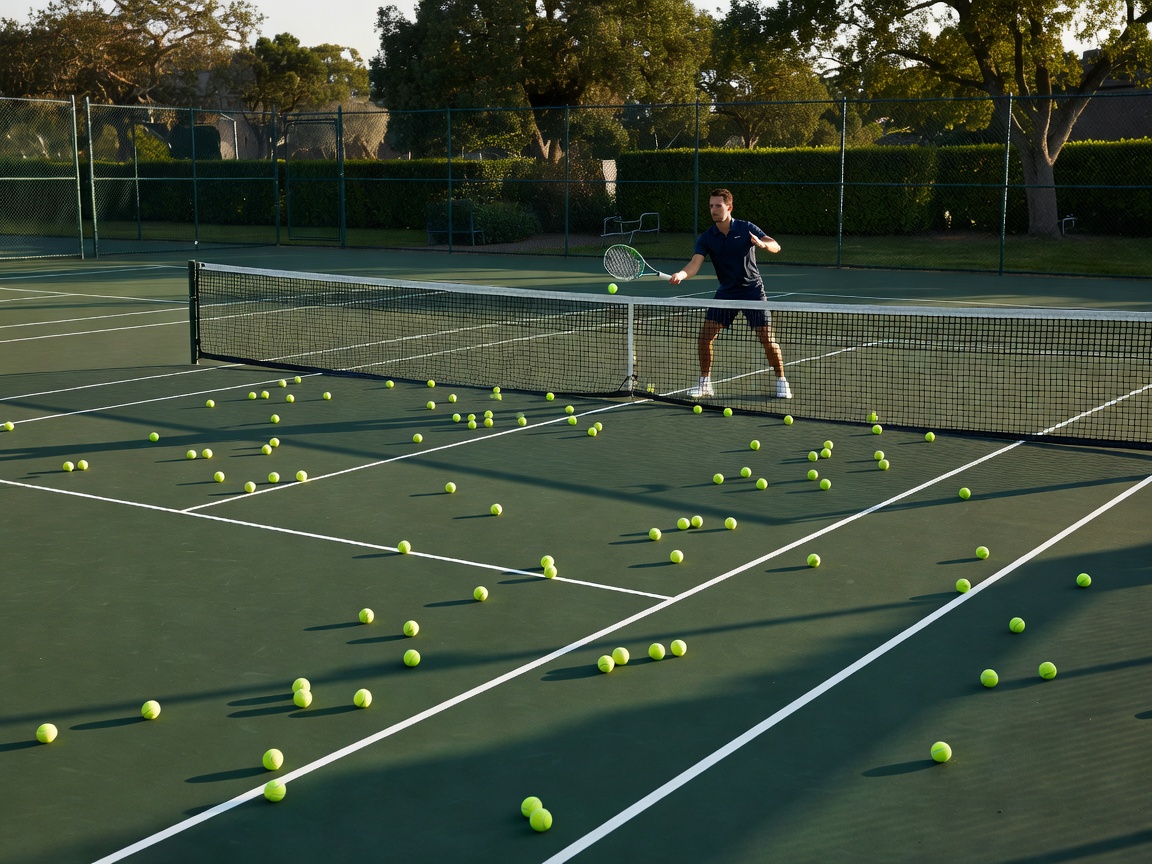
Tennis is wonderfully specific. A small change in timing, balance or decision-making can alter an entire point. That makes camp design important: sessions need enough repetition to notice patterns, with enough variation to keep practice connected to real play.
Technical practice with a purpose
Technical work may cover contact point, racquet path, serve rhythm, return position, movement into the ball and recovery after the shot. The best structure depends on level and context. A beginner may need calm explanations and predictable repetition; an experienced player may benefit from constraints that create more decisions.
Footwork deserves its own attention. Split steps, recovery patterns, lateral movement and court positioning can be practised without turning every minute into a fitness test. Serve development may involve rhythm, placement and repeatable routines rather than simply hitting more serves.
Rallies, tactics and match play
Rally consistency grows when players understand the intention behind a pattern. Cross-court exchanges, changes of direction, height and depth can be explored before adding score pressure. Match play then reveals which choices hold up when the point becomes less tidy.
Tactical decision-making is easier to discuss when players can review moments: why was that ball selected, where was the opponent, and what recovery position followed? A camp doesn’t need elaborate technology to create useful reflection. A notebook and a clear question can do a surprising amount.
Surface, group size and coaching format
Clay, hard court and other surfaces influence movement, bounce and the rhythm of points. Ask which surface is available, whether it suits the group and how weather affects access. Individual coaching can provide detailed attention, while group sessions introduce varied ball speeds, patterns and competitive situations.
A useful day might alternate technical work, tactical practice, match play and recovery rather than stacking demanding court hours together. Build in meals, hydration, shade and time away from the court. The calendar is part of the coaching.
Choosing a suitable camp
- Are ability levels grouped thoughtfully?
- Does the schedule balance repetition, variety and match play?
- Which court surfaces and indoor options are available?
- How are coaching, equipment, transfers and downtime described?
- Can the programme adapt to weather or fatigue?