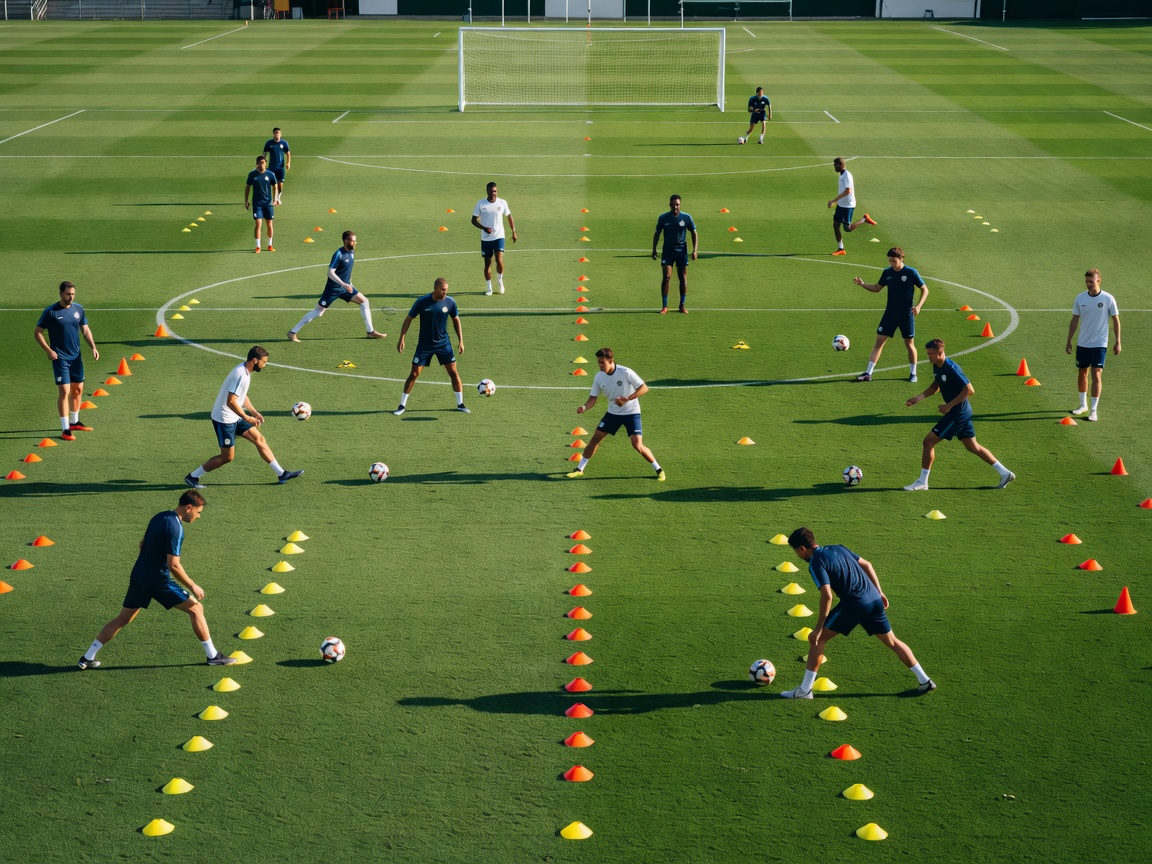
Football training camps can suit youth groups, amateur teams, development squads or individual players looking for a concentrated change of environment. The format should be chosen around experience, group size and purpose rather than a glossy itinerary.
What a considered programme can include
Technical training might focus on first touch, passing angles, receiving under pressure, finishing or ball protection. The useful question is how the skill work connects to decisions in play. A line of isolated drills can have value, but it shouldn’t be the whole story.
Tactical sessions can explore shape, pressing cues, transitions, build-up and set-piece organisation. These sessions are often more productive when the language is clear and the group knows what to observe. Small-sided games then give players a chance to test ideas in a changing context.
Position-specific work may help defenders, midfielders, attackers and goalkeepers consider the details of their roles. It should sit alongside team training, not create four separate camps by accident. For individual players, a smaller format may allow more targeted feedback; for teams, shared reference points usually matter more.
Intensity, fitness and recovery
A camp schedule needs variation. High-focus sessions, lower-load technical work, mobility, meals and sleep all belong in the plan. Fitness elements can be integrated through football or scheduled separately, depending on the group and available space. Avoid plans that assume everyone arrives with the same training history.
Recovery is practical rather than glamorous: hydration, food, downtime, suitable beds, manageable transfers and access to calm spaces. It’s also useful to build in flexibility for weather, fatigue or a late travel arrival.
Individual or group camp?
Individual camps can offer more attention and a narrower focus, while group camps create communication, shared habits and team context. Neither is automatically superior. Consider whether the main goal is personal technique, a team identity, a change of routine or simply a well-organised training week.
Football camp checklist
- Is the playing surface suitable for the group and planned sessions?
- How are age, experience and mixed ability handled?
- What is included in the daily schedule, and what remains flexible?
- Are equipment, supervision, meals, transfers and accommodation clearly described?
- How much recovery time sits between demanding sessions?